

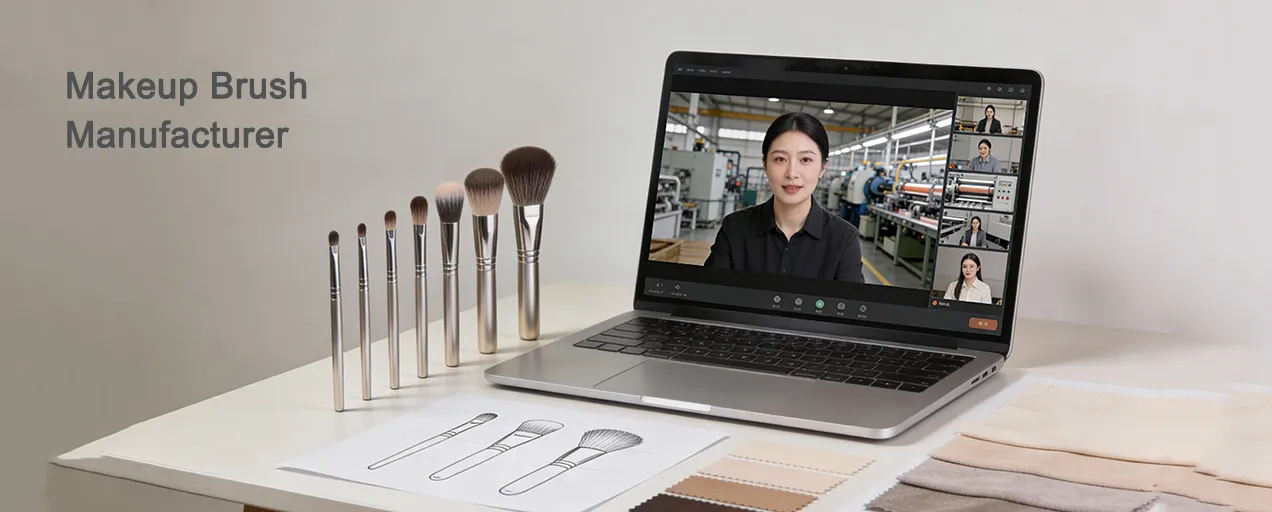
You didn’t start an indie beauty brand just to slap your logo on generic brushes. You care about textures, tiny details, and how your tools feel in your customer’s hand – and you need a makeup brush manufacturer that cares just as much. If you’ve already tried low‑cost suppliers, you know how quickly scratchy bristles, shedding and late shipments can erode a carefully built brand story.
This guide is written for small, design‑driven brands that want a long‑term manufacturing partner. It walks you step by step through finding, testing and finally choosing a makeup brush manufacturer that can truly support a high‑end, personality‑driven brush line.
Quick Navigation
- Step 1: Define what you really need from a makeup brush manufacturer
- Step 2: OEM, ODM or trading company – which model fits a niche luxury brand?
- Step 3: Which region should you choose your makeup brush manufacturer from?
- Step 4: Where to actually find trustworthy makeup brush manufacturers
- Step 5: How to evaluate samples and audit a makeup brush manufacturer
- Step 6: Use a scorecard to choose your long‑term makeup brush manufacturer
- FAQ: Common questions from indie founders
Step 1: Define what you really need from a makeup brush manufacturer
Before you start comparing quotes, get clear on what a makeup brush manufacturer has to deliver for your specific indie brand. This turns vague “high quality” wishes into concrete selection criteria.
Grab a notebook or a doc and write down:
Product principles
- Vegan / cruelty‑free only or open to certain natural hairs.
- Brush density, softness level, and finish you consider “on brand” (name 3–5 reference brands you want to match or surpass).
Business constraints
- Realistic MOQ range you can handle for sets and singles.
- Target retail price bands and the maximum landed cost you can accept per brush or per set.
Brand experience
- Visual style for handles, ferrules and packaging (minimal, playful, editorial, artisanal, etc.).
- What matters more right now: design control, flexibility on small batches, or speed to market.
Once these points are written down, they become your filter: any makeup brush manufacturer you consider must be able to work within these boundaries, or they are not a real candidate. Going into Step 2 with this list will make choosing between OEM, ODM or a trading setup much easier.
Step 2: OEM, ODM or trading company – which model fits a niche luxury brand?
Before you start emailing factories, decide what kind of collaboration you want. The model you choose will shape how you work with your makeup brush manufacturer, how custom your brushes can be, and how much you need to invest up front.
OEM: when your brand has a clear creative vision
OEM is ideal if your brand already has strong product ideas and visual language.
- You or your designer define head shapes, hair types, ferrules, handle silhouettes, finishes and logo details. The makeup brush manufacturer brings that vision to life through engineering and production.
- This path gives you maximum control over performance and aesthetics, which is crucial for a niche high‑end line. It does require more development time and usually higher MOQs than pure catalog picks.
- OEM works best when you want a signature hero brush or a tightly curated set that no one else has.
ODM: when you want speed, but still care about identity
ODM starts from the manufacturer’s existing designs and refines them into something that fits your brand.
- You pick base shapes and sets from your makeup brush manufacturer’s catalog, then customize hair, colors, finishes and packaging.
- For indie brands, ODM is a sweet spot: you get quality and proven shapes while still making the line look and feel on‑brand. Start here if you need to launch quickly or validate demand.
- Make sure you discuss how many other brands use the same base and what kind of exclusivity (colors, bundles, finishes) your manufacturer can offer.
Trading company: when you are still testing
If you are in a very early stage, a trading company can help you bundle tools and accessories without committing to one makeup brush manufacturer right away.
- Trading companies source from multiple factories, so they can combine brushes, tools and cosmetic accessories into one order.
- The drawback: you have less control over which manufacturer actually makes your brushes, and communication becomes one layer more complex.
- Use this route for small test batches, but plan to move to a direct relationship with a core makeup brush manufacturer once you find your footing.
For most indie luxury brands, the ideal setup is either a focused ODM relationship or a small‑batch OEM project with a manufacturer that understands your aesthetic.
If you’re still unsure whether to work through an intermediary or go factory‑direct, take a look at our guide “OEM vs ODM vs Trading Comapny: Makeup Brush Brand Guide” for a side‑by‑side breakdown before you move on.
Step 3: Which region should you choose your makeup brush manufacturer from?
Where your brushes are made shapes cost, craftsmanship and perceived value. For indie brands, this choice is part practical, part storytelling.
China: flexible private‑label powerhouse
If you are looking for a balance of quality, customization and cost, a Chinese makeup brush manufacturer is often the most practical option.
- Mature brush clusters provide everything from vegan fibers and natural hair to handles, ferrules and luxury packaging, often within driving distance.
- Many Chinese manufacturers now specialize in high‑end, low‑to‑mid‑volume projects for indie and clean beauty brands, not just mass retail. They can be surprisingly flexible with design details if you bring a clear brief.
Japan and Korea: artisan stories and prestige
Japanese and Korean brush houses are a natural fit if your brand story leans into craftsmanship and ritual.
- These regions host some of the world’s most respected makeup brush manufacturers, especially for natural hair and super‑precise shapes.
- Expect higher prices and often longer lead times, but also brushes that can justify premium price points and “made in …” romance in your marketing.
Europe and North America: local made plus compliance
If your audience strongly values local production, you may want a makeup brush manufacturer in your own region.
- European and North American suppliers lean on strict compliance, traceability and shorter shipping times.
- Capacity and MOQs may be more limiting, so this route tends to work best for higher price points or smaller, showpiece collections.
If you want a deeper comparison of how these three regions differ – and which one fits your brand’s price point and story – read “How to Choose Makeup Brush Manufacturer: China, Japan, Europe”.
Step 4: Where to actually find trustworthy makeup brush manufacturers
Once you know your model and preferred region, you can start building a shortlist of potential partners. The aim is to identify several makeup brush manufacturers that could realistically match your standards, then gradually narrow down.
B2B platforms – but with filters
B2B marketplaces can be noisy, but they are still a useful starting point if you search smart.
- Use filters for verified suppliers, export region, and product focus, then search specifically for “makeup brush manufacturer” rather than generic “cosmetics”.
- Cross‑check any manufacturer you like against their own website, social channels and third‑party reviews before you send detailed briefs or pay for samples.
Trade shows and events
Beauty trade shows remain one of the fastest ways to feel the difference between makeup brush manufacturers.
- Walk the brush and tool aisles with your brand moodboard and a couple of reference brushes in hand.
- Pay attention not only to samples, but also to how the sales or product team talks about hair, shapes and finishes – it reveals how much they really understand brushes.
Referrals and discreet introductions
Some of the most indie‑friendly makeup brush manufacturers do not shout loudly online.
- Ask your packaging vendors, ingredient suppliers or fellow founders which manufacturers they trust.
- Many indie‑supportive factories are open to small runs if they see that you are serious about design and long‑term partnership.
Beyond B2B platforms, many indie founders also discover potential partners through Google searches, manufacturers’ own websites, social media, and even communities or mastermind groups. If you want a deeper walkthrough of all these sourcing channels – and how to vet each one – read “Where to Find Professional Makeup Brush Suppliers (and How to Qualify Them Fast) ”.
Step 5: How to evaluate samples and audit a makeup brush manufacturer
Beautiful websites and PDFs are easy; beautiful brushes are not. This is where you separate a marketing‑driven supplier from a truly skilled makeup brush manufacturer.
Evaluating samples like a pro
When samples arrive, test them as if they were already on your customer’s vanity.
- Performance: Try them with your actual formulas – creamy foundations, soft powders, glitter shadows. Take note of pickup, payoff, blendability and whether they leave streaks.
- Sensory details: Close your eyes and feel the transition from ferrule to hair, the snap of the bristles, the weight balance in your hand. High‑end brands are built on this level of detail.
- Consistency: Compare several copies of the same brush. A good makeup brush manufacturer will produce nearly identical heads, crimps and prints; big variations now mean bigger problems later.
Auditing your future partner
If you see promise in the samples, dig deeper into how the makeup brush manufacturer actually works.
- Ask for a remote video tour or, ideally, plan an in‑person visit. You want to see hair processing, shaping, gluing, assembly, painting, printing and final inspection.
- Talk directly to the product or development lead, not只 the salesperson. Their questions and comments will show how seriously they take indie‑level details.
- Review their process documents: how they handle incoming materials, color matching, limited runs and repeat orders for seasonal collections.
Step 6: Use a scorecard to choose your long‑term makeup brush manufacturer
By this point you may have two or three strong contenders. They all talk well, their samples are decent and pricing is within range. A simple scorecard helps you choose the makeup brush manufacturer that fits your brand best instead of just the one who emailed last.
What to score
Give each manufacturer a score from 1–5 in each category, then apply weights according to your priorities (for example, quality and design support higher than rock‑bottom pricing):
- Brush quality and performance
- Aesthetic alignment with your brand (handles, finishes, packaging options)
- Communication and problem‑solving style
- Flexibility with MOQs and batch sizes
- Lead times and scheduling transparency
- Experience with indie or niche brands at a similar price point
How to use the scorecard
- Combine your scores with qualitative notes: “best for hero brushes”, “most flexible with low MOQs”, “strongest handle finishes”.
- Use this overview to choose one main makeup brush manufacturer plus, if needed, a secondary partner for special projects or different regions.
Once you’ve scored each option and shortlisted one or two favorites, the final question is simple: can you really trust this factory with your brand? For a deeper decision framework, read “Tips 8 to Judge If a Makeup Brush Factory Is Trustworthy”.
FAQ: common questions from indie founders
1. What MOQ can an indie brand realistically expect from a makeup brush manufacturer?
Most makeup brush manufacturers will quote MOQs in the 500–1,000 set range for kits and 1,000–3,000 pieces for single brushes, but there is room for nuance.
- ODM projects and catalog shapes often come with lower MOQs, especially if you choose standard colors and finishes.
- If you lead with a clear, realistic road‑map (for example, phased orders tied to milestones), some manufacturers are open to starting smaller.
2. How can I keep luxury quality without killing my margins?
A good makeup brush manufacturer will help you make smart trade‑offs instead of just cutting corners.
- Focus your budget on the brushes that most affect the experience (foundation, powder, blending) and simplify less critical items.
- Use premium handles and ferrules with carefully chosen synthetic fibers instead of defaulting to expensive natural hair if your brand is cruelty‑free.
3. What should I ask in the first call with a potential makeup brush manufacturer?
- Ask which brands or price tiers they mainly work with, and what kind of projects they enjoy most.
- Ask how they handle small batches, reorders and design tweaks. Their answers show whether they are used to working with indie brands or only huge retailers.

