

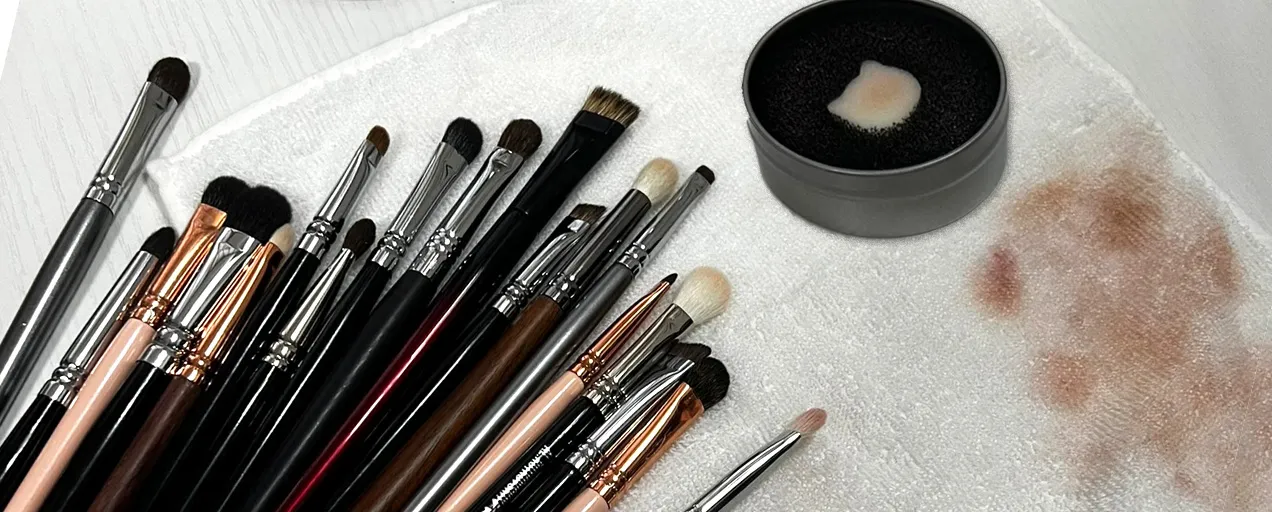
As a busy makeup artist, influencer, or beauty professional, you often do not have time for a full deep clean between every client. Still, you need to quickly clean makeup brushes between clients so they stay hygienic, dry, and ready to use again within minutes. This guide shows you how to quickly clean makeup brushes using wipes, dry sponges, and spray cleaners so your kit never slows you down.
Important: The methods below are for quick cleaning and disinfection between clients, not a replacement for regular deep cleaning with soap and water.
Set Up a Quick‑Cleaning Station to Quickly Clean Makeup Brushes
Having a dedicated mini station in your kit saves precious time. Ideally, keep these items together in a small pouch or tray:
- Fast‑drying brush cleaner spray (alcohol‑based or professional formula)
- Dry cleaning sponge (color‑switch sponge)
- Brush‑cleaning wipes or alcohol wipes
- Microfiber cloth or paper towels
- Small trash bag for used wipes and tissues
This setup makes it easy to quickly clean makeup brushes between clients without interrupting your workflow.
At the end of the day or when you return to the studio, switch to a full deep‑clean routine for all brushes. For a full step‑by‑step guide to washing and drying brushes at home, see our complete guide on How To Clean Makeup Brushes at home.
1. Use Makeup Brush Cleaning Wipes
For liquid, cream, or paste products, makeup brush cleaning wipes are ideal for quick surface cleaning.
- Take a fresh wipe and gently swipe the bristles back and forth until no more product transfers.
- Focus on the tips of the bristles where foundation, concealer, or cream blush tends to build up.
- Allow the brush to air‑dry for a minute or two before loading new product.
Wipes are especially useful for complexion brushes when you need to refresh the brush quickly without soaking it.
2. Use a Dry Cleaning Sponge
A dry cleaning sponge is one of the fastest ways to quickly clean makeup brushes loaded with powder products.
- Swirl the brush in circular motions on the sponge to remove loose pigment.
- This works extremely well for blush brushes, eyeshadow brushes, blending brushes, and brow brushes.
- Within seconds, most of the powder is removed, so you can switch from dark to light shades without muddying the colors.
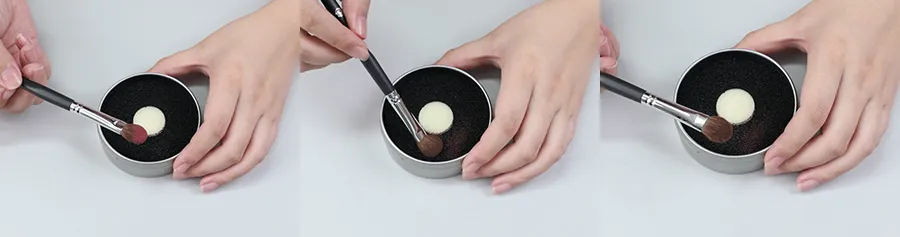
A dry cleaning sponge does not disinfect, but it is the fastest way to remove powder residue and keep colors clean on set.
3. Spray Cleaners: Fast Cleaning and Disinfection in One Step
Alcohol‑based brush cleaners or professional spray sanitizers are the backbone of quick cleaning between clients.
How to use a spray cleaner effectively:
- Place a folded tissue or microfiber cloth on your work surface.
- Spray the cleaner directly onto the bristles or onto the tissue until lightly saturated.
- Gently swirl or wipe the brush on the tissue, repeating until no more color or residue comes off.
- Fan the bristles slightly and let them air‑dry; most formulas dry within 30–60 seconds.
Tips:
- For eye and lip brushes that touch mucous membranes, spend a few extra seconds to ensure all visible product is removed.
- Avoid soaking the ferrule and handle with alcohol repeatedly, as it may loosen glue or dull coatings over time—use targeted sprays instead of full submersion.
Prioritizing Brushes During Back‑to‑Back Clients
High‑priority brushes
- Lip brushes, eyeliner brushes, small detail brushes
- Any brush used on spots, blemishes, or around the eyes and mouth
These must be fully color‑free and disinfected with a spray cleaner before they touch the next client.
Medium‑priority brushes
- Eyeshadow and blending brushes
- Brow brushes, contour and highlight brushes
First remove excess powder with a dry cleaning sponge, then follow with a brush cleaner spray or sanitizing wipe for partial disinfection.
Low‑priority brushes
- Large powder brushes and fan brushes used only with clean, dry powder products.
These can be quickly cleaned on a dry sponge between several clients and then deep cleaned thoroughly at the end of the day.
By focusing on these high‑priority tools first, you can quickly clean makeup brushes that matter most for hygiene and still stay on schedule. If your schedule and budget allow, keep two sets of your core brushes and rotate them. This greatly reduces downtime waiting for brushes to dry.
Quick‑Drying Tricks So Brushes Are Ready in Minutes
Even with fast cleaners, slightly damp brushes can affect color payoff and blendability, so it helps to speed up drying safely.
- After using a spray cleaner, gently fluff the bristles with your fingers to open them up so the alcohol can evaporate more quickly.
- Lay cleaned brushes flat on a paper towel near a fan or air‑conditioner vent to increase airflow and shorten drying time.
- Avoid blasting very hot air from a hair dryer directly onto the bristles; if you must use a dryer, choose a cool or low‑heat setting and keep it at a distance.
- Most small synthetic brushes cleaned with an alcohol‑based spray will feel dry to the touch within about 30–90 seconds and can safely go back into use.
These tricks make it possible to quickly clean and dry makeup brushes between clients without compromising performance.
Hygiene and Cross‑Contamination Rules
Quick cleaning is not only about removing visible makeup; it is also about protecting clients from cross‑contamination.
- Never dip a used brush straight into cream or liquid products and back onto a client’s face. Decant onto a palette with a spatula, then clean the tools with alcohol between clients.
- Do not share mascara wands or lip gloss applicators. Use disposable wands or decant product whenever possible.
- Wipe brush handles, palettes, lash curlers, tweezers, and other tools with alcohol wipes or a disinfectant spray after each client.
- Always wash or sanitize your hands before and after every appointment, and keep hand sanitizer within reach at your station.
Quick Cleaning vs. Deep Cleaning
Fast brush cleaning between clients is a temporary solution; it does not replace proper deep cleaning with soap and water.
- Use wipes, dry sponges, and spray cleaners during the day to remove product and disinfect so you can keep working safely.
- At the end of each workday, deep clean all used brushes: wash with a gentle cleanser, rinse until the water runs clear, reshape the bristles, and let them air‑dry completely overnight.
- Schedule regular “kit check” sessions to remove damaged or shedding brushes and replace them before they become a hygiene risk.
👉 For a full routine, see our deep cleaning makeup brush guide.
Building a Fast but Safe Brush Routine
For busy makeup artists, the goal is to balance speed and safety. With a simple system you can quickly clean makeup brushes between clients, then deep clean them at the end of the day for long‑term brush health.
When you pair these habits with consistent deep cleaning after work, your brushes last longer, perform better, and help you deliver a professional, sanitary experience to every client.

